
Yasmine Barbir
Voices of Change: Yasmine Barbir | FMCG Executive & Responsible Business Transformation Leader
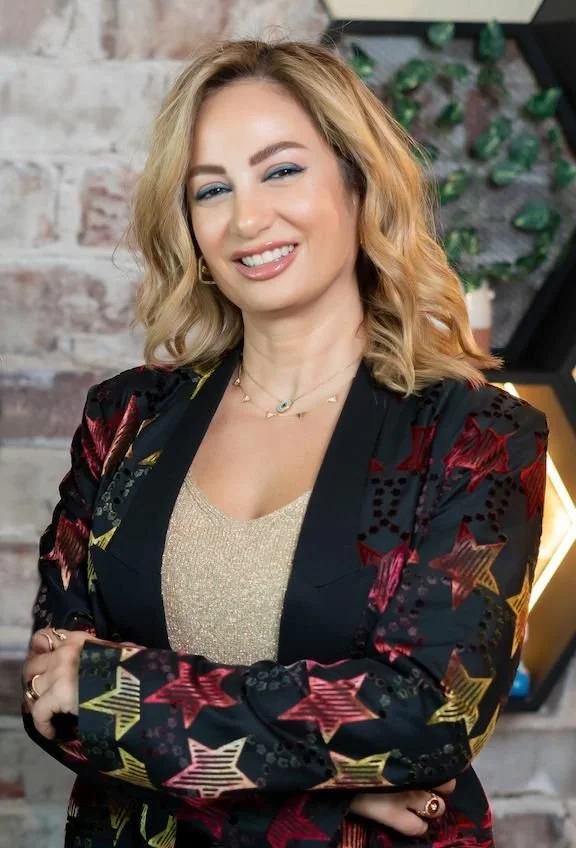
Yasmine Barbir is a seasoned executive with over 20 years of leadership driving business growth, transformation, and sustainability across the MENA region.
At Nestlé, she built a powerful commercial legacy, leading multimillion-dollar operations, navigating volatile markets, and delivering consistent results. As Country Manager for Nestlé Lebanon, she was the first woman to lead the business in the market’s history, steering it through political and economic turbulence while achieving sustained double-digit growth. Later, as Country Manager for Nestlé UAE, she directed a USD 280M operation with 388 employees, driving portfolio expansion and category growth through innovation, organizational redesign, and customer-centric route-to-market strategies.
Her leadership was marked by bold transformations: joint business planning and category management, SKU optimization, and trade spend restructuring that strengthened profitability. She executed distributor transitions with zero receivables exposure, re-engineered organizational structures to deliver multi-million savings, and championed digital solutions to improve forecasting and visibility. Equally recognized for her people-centric leadership, she built high-performing teams, inspired cultural transformation, and contributed to Nestlé Middle East’s first Gender Balance Committee, advancing inclusion and diversity across the region.
Appointed by top management to launch the region’s first dedicated ESG function, Yasmine became Nestlé MENA’s Head of Sustainability, where she designed the regional decarbonization roadmap, embedded sustainability governance across functions and geographies, and advanced initiatives in regenerative agriculture, packaging circularity, and climate action. She represented Nestlé at COP27, forging partnerships and shaping policy dialogue to position the company as a sustainability leader in MENA.
Today, as Co-Founder and Chief Impact Officer of FusionMinds.ai,Yasmine bridges AI, education, and sustainability to democratize ESG knowledge and accelerate responsible growth models. She is also the Founder of Responsible Legacy, advising corporates and family businesses on aligning profitability with purpose, and a Senior Advisor at Enlighten Advisory shaping transformative strategies that create long-term value.
Her academic foundation includes an MBA and BBA from the American University of Beirut (AUB), alongside executive programs from MIT Sloan (AI & Business Strategy), Cambridge (Governance), INSEAD (Circular Economy), and EIIS (Biodiversity & Business Sustainability). A sought-after panelist and speaker, she is recognized for her ability to bridge commercial acumen with ESG innovation, inspiring businesses to expand responsibly while creating lasting impact.
Interview:
SAWA: Can you tell us a little bit about yourself?
Yasmine: I’m Lebanese and based in Dubai. I’m a mother of three, which is the most important role in my life. Professionally, I spent nearly two decades at Nestlé in senior leadership roles across Kuwait, Lebanon, and the UAE, including Country Manager positions. My work has always focused on driving business performance while navigating complexity and transformation. Today, my passion sits at the intersection of business strategy and sustainability, advancing responsible growth that creates value for both business and society.
SAWA: What first drew you to impact work?
Yasmine: Sustainability became a formal part of my career later one, but creating impact has always been a part of who I am. From early on, I was drawn to supporting others, mobilising teams, and driving meaningful outcomes. As I took on larger leadership roles, I found myself increasingly focused on how businesses can grow while contributing positively to society and the planet. Over time, this became a clear direction. When I was asked to take on the sustainability mandate, it felt like a natural evolution, combining business acumen with purpose. That’s when I realised this is where I could create the most meaningful and lasting impact.
SAWA: How do you feel like your identity and connection to the MENA region has shaped your approach?
Yasmine: I have a deep connection to this region because of its richness, resilience, and strong value systems. At its core, MENA is deeply rooted in family, community, and humanity. You cannot speak about sustainability without putting people at the centre. Our connection to our roots, even while living and working across different countries, gives us a strong sense of responsibility toward future generations. This perspective allows us to shape solutoins that are not only effective, but also grounded in the realities and needs of our communities.
SAWA: There are endless sustainability challenges in the world today, what do you feel most connected to today?
Yasmine: All sustainability challenges are interconnected, but what concerns me most is the eriosion of human values, particularly respect, peace, and dignity. Without these foundations, progress in other areas risks being undone. We can advance climate action or resource efficiency, but without alignment on humanity, those efforts remain fragile.
SAWA: Can you tell us about FusionMinds.ai and what inspired you to co-found it?
Yasmine: FusionMinds.ai was built to democratise sustainabilty and make it more accessible to everyone. We believe sustainability should not be limited to specialists, but embedded across individuals, organisations, and systems. We focus on key areas. FusionEd provides accessible, high-quality education to build sustainability knowledge and capabilities. FusionGen, through our AI platform Gaia, helps organisations measure, manage, and advance their sustainability performance. FusionWorks aims to create an ecosystem that connects talent, solutions, and business needs. Our goal is to create a platform that supports the full journey, from awareness and education, to execution and impact.
SAWA: How do you see AI supporting companies in scaling sustainability solutions?
Yasmine: One of the biggest barriers to scaling sustainability is complexity, particularly around data and reporting. Many organisations are overwhelmed by information, which can shift focus away from strategy and action. AI can play a critical role by simplifying this complexity. It can process data, generate insights, and help organisations understand where they are and where they need to go. This allows leaders to focus on decisions that matter, setting priorities, shaping strategy, and driving meaningful progress. AI doesn’t replace human judgement, but it enables it to be more effective.
SAWA: How can people follow or support your work?
Yasmine: People can connect with us through FusionMinds.ai, as well as on LinkedIn and Youtube, where we share insights and conversatoins with thought leaders. We are always open to collaboration, learning, and engaging with organisations and individuals who are committed to advancing repsonsible business.
SAWA: Can you share a regional leader or organisation that inspires you?
Yasmine: There are many inspiring initiatives in the region. Goumbook, led by Tatiana Antonelli Abella, has grown into a strong platform advancing environmental awareness and action across multiple areas.
I also admire the work of the AUB Nature Conservation Center for its research and community impact, as well as the IUCN under the leadership of Razan Khalifa Al Mubarak for its work on biodiversity.
I’m equally inspired by Majd Fayyad for his thought leadership in sustainability and Net Zero and by Nadine Zidani, founder of MENA Impact, for her continued support of impact-driven founders across the region.
SAWA: What advice would you give to professionals looking to follow a similar path?
Yasmine: No matter your role or function, everyone has a part to play in advancing sustainability. Whether you are in finance, marketing, operations, or supply chain, your decisions have an impact.
It starts with awareness, then with small, intentional actions that build over time. We don’t need perfect solutions, we need progress. No one has all the answers, but by learning from each other and staying committed, we can collectively build more sustainable and responsible systems.