
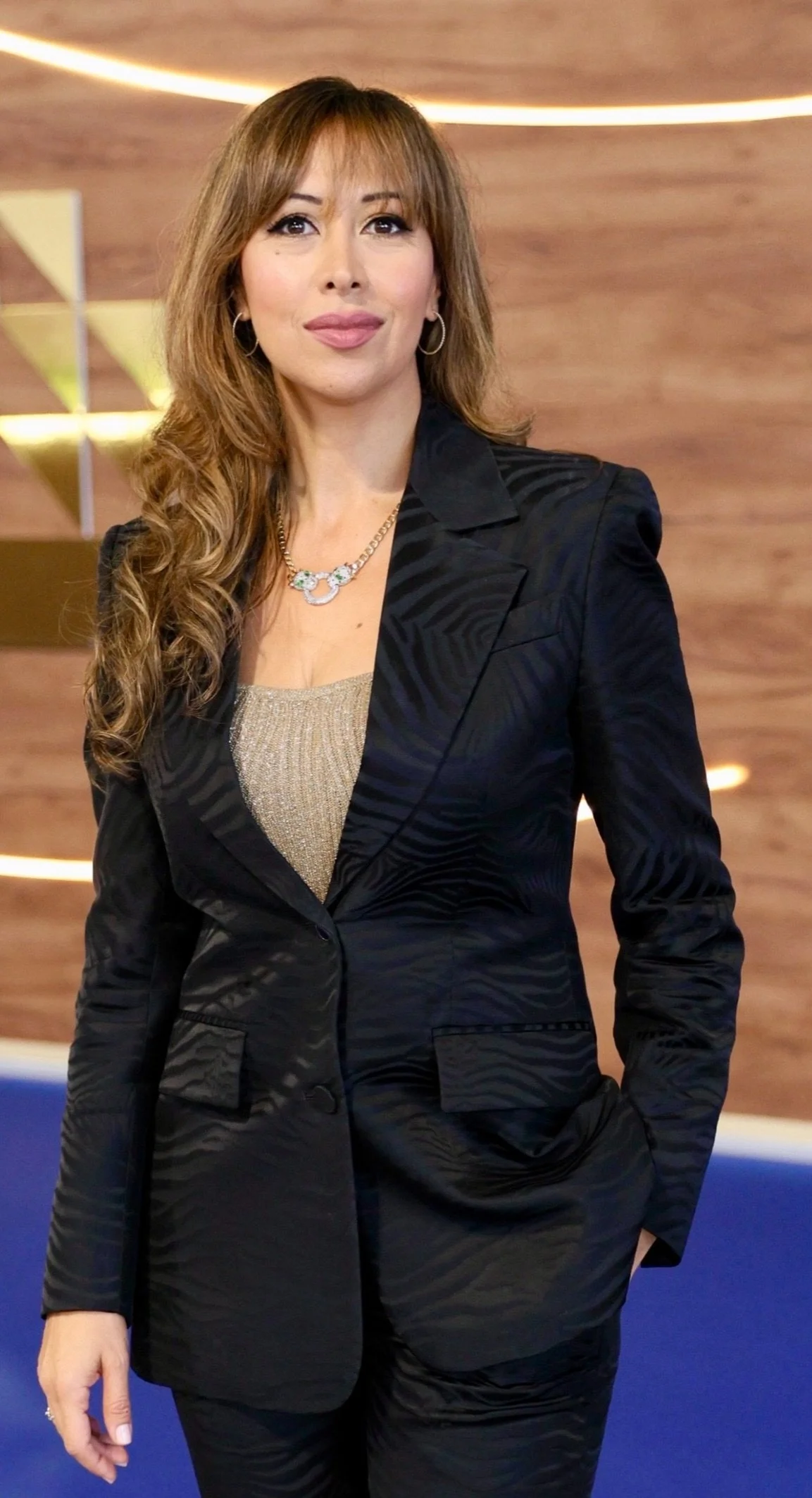
Voices of Change: Dr. Carole Nakhle | Founder and CEO of Crystol Energy, navigating the geopolitics of global energy
Dr Carole Nakhle is Founder and CEO of Crystol Energy, an independent advisory firm specialising in energy markets, policy, geopolitics and investment.
With nearly three decades of international experience, Dr Nakhle has advised governments, parliaments, international organisations, multilateral institutions and major energy companies on energy strategy, policy, investment and the geopolitical and economic challenges shaping global energy markets.
Dr Nakhle is Secretary General of the Arab Energy Club and a Board and Audit Committee Member of the Natural Resource Governance Institute. She also lectures, supervises and examines doctoral research at leading academic institutions and contributes to executive education programmes, including at the University of Oxford.
She is the author of Petroleum Taxation: Sharing the Wealth and co-author, with former UK Energy Secretary Lord David Howell, of Out of the Energy Labyrinth. She is widely published on energy policy, economics and geopolitics.
A regular commentator in international media, she provides analysis of oil and gas markets, energy security, geopolitical developments, energy transition and their implications for the global economy. She contributes to international and regional media in both English and Arabic.
An experienced international keynote speaker and moderator, Dr Nakhle regularly contributes to high-level discussions on global energy challenges. She is Founder and President of Access for Women in Energy and a Fellow of the Energy Institute. Her professional and civic distinctions include being a Liveryman of the Worshipful Company of Fuellers and a Freeman of the City of London.
SAWA: Could you briefly introduce yourself and tell us about your work at Crystol Energy, and the range of advisory work you do with governments, industry and international organisations on global energy issues?
Carole: I am the founder and CEO of Crystol Energy, an independent advisory firm working at the intersection of energy, economics, policy and geopolitics. We help governments, international organisations and businesses navigate an increasingly complex energy landscape, from investment decisions and fiscal regimes to energy security and the transition towards more sustainable energy systems.
What distinguishes Crystol Energy is our independent thinking, global perspective and ability to connect the bigger picture with the realities on the ground. We don’t simply analyse energy markets; we examine the economic, political and commercial forces shaping them, challenge conventional thinking and help our clients make better-informed decisions. And perhaps most importantly, we genuinely enjoy what we do!
SAWA: What first drew you to energy economics, and to founding Crystol Energy specifically?
Carole: I am an economist by training and chose to pursue a PhD in energy economics because energy touches almost every aspect of our daily lives, yet we often take it for granted. Over the years, I worked with a wide range of stakeholders, including other consultancy firms, before deciding to establish Crystol Energy.
I didn’t want to create another consultancy driven primarily by winning projects and meeting sales targets. I wanted to build a company where I could pursue work I genuinely enjoy, alongside colleagues who share that passion, and where creating value matters more than generating revenue. Independence is also fundamental to our philosophy. If a project doesn’t align with our principles and values, we simply don’t take it on, and we are open with our clients about why.
Energy & MENA ContexSAWA: How has your identity and connection to the MENA region shaped your approach to your work, including your role as Secretary General of the Arab Energy Club?
Carole: Growing up in Lebanon, I learned firsthand what energy poverty really means, while constantly hearing about the notable wealth generated by oil and gas in the Arab world. That contrast has stayed with me and shaped how I think about energy, economic development and governance.
Coming from the region, speaking its language and understanding its cultural nuances also give me insights that complement my professional experience. But MENA is far from homogeneous, with countries facing very different circumstances, priorities and challenges. While my work is global, I remain deeply connected to the region. As Secretary General of the Arab Energy Club, I value the opportunity to bring together energy experts from across the Arab world to exchange ideas, challenge perspectives and contribute to a better understanding of the region’s energy landscape.
SAWA: Given your focus on oil and gas markets, fiscal regimes and the energy transition, what challenge in the energy space are you most focused on right now, and why?
Carole: It is difficult to single out one challenge because energy security, investment, geopolitics, fiscal policy and the energy transition are all interconnected. Current events inevitably influence where we focus our attention at any given time, particularly when markets face major disruptions.
However, much of our work takes a longer-term perspective. Energy projects require substantial investment, take years to develop and often operate for decades. Decisions made today will shape energy systems for years and decades to come. The challenge is to respond to immediate pressures without losing sight of longer-term priorities.
SAWA: What do you think is unique about addressing energy and sustainability issues in the MENA region specifically?
Carole: The MENA region occupies a unique position in the global energy landscape. It is home to some of the world’s largest oil and gas reserves, yet also includes countries struggling with energy poverty, inadequate infrastructure and limited financial resources. Even among the major energy producers, economic circumstances and priorities differ considerably.
This diversity means there is no single approach to sustainability that works for everyone. The challenge is to reconcile environmental ambitions with economic development, energy security and affordability. What makes the region particularly interesting is that the choices it makes will have implications not only for its own future but also for global energy markets.
SAWA: What role does collaboration, between governments, industry and institutions like the Natural Resource Governance Institute, play in accelerating impactful solutions in the energy transition?
Carole: Energy challenges are too complex and interconnected for any government, company or institution to tackle alone. Governments set the policy and regulatory framework, businesses bring investment, technology and practical experience, while research institutions and other organisations contribute knowledge and independent perspectives.
But collaboration should go beyond dialogue and good intentions. It needs to build trust, align incentives and deliver practical results. This is particularly important in energy, where decisions often cross national borders and require long-term commitments. Equally, effective collaboration does not mean everyone has to agree. Constructive debate and different perspectives are essential to finding better solutions.
SAWA: What’s one word you would use to define sustainability in the MENA region?
Carole: Balance. Sustainability is not just about environmental protection. It is also about economic prosperity, social development and energy security. The challenge is to balance these objectives in ways that reflect each country’s circumstances and priorities, while recognising that the balance itself will evolve over time.
SAWA: Having founded Access for Women in Energy back in 2007, what advice would you give to young professionals, particularly women, looking to enter the energy sector? And, what do you wish someone had told you earlier in your journey?
Carole: My advice is to stay curious, invest in developing your expertise and never stop learning. Energy is a fascinating industry, and there are many different paths into it. Don’t feel you have to follow a conventional career route or fit someone else’s expectations.
I founded Access for Women in Energy because I kept finding myself as the only woman in the room, and no one could give me a convincing explanation as to why. I wanted to understand what was behind this imbalance and, more importantly, do something about it.
As for what I wish someone had told me earlier: never take time with the people you love for granted. I remember leaving my grandmother to return to the UK for a meeting with my PhD supervisor and to continue my research. I was convinced I would see her again on my next visit. But she passed away before I returned. All these years later, I still wish I had stayed a little longer. My research could have waited. But some moments simply cannot be postponed.
SAWA: How can people follow or support your work?
Carole: The easiest way is through Crystol Energy’s website and LinkedIn, where we share our research, analysis and perspectives on global energy developments. I also share my own publications, speaking engagements and reflections on LinkedIn. And of course, I always welcome thoughtful exchanges and different perspectives. Some of the most interesting ideas emerge from conversations!